

Natural Extremity Node
Zermatt
Zermatt, Swiss Alps
Legendary · held by 110 collectors
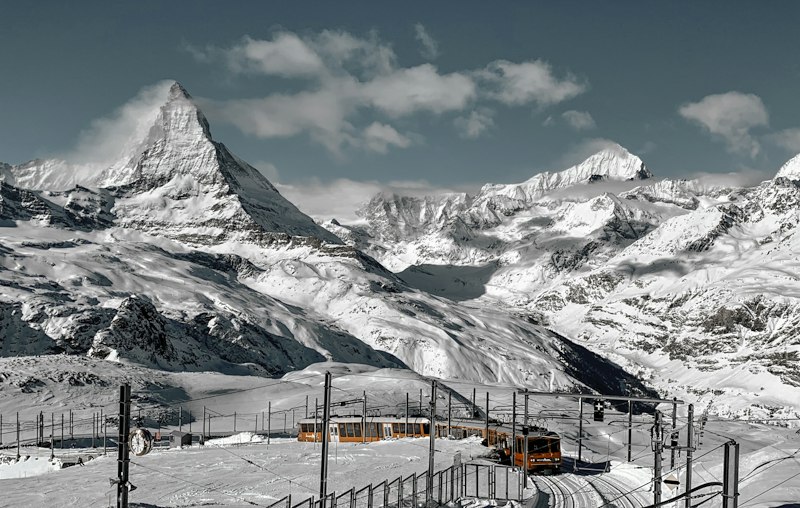
Zermatt is the highest and most geographically dramatic ski resort in the Alps — a car-free village in the canton of Valais, Switzerland, situated at 1,620 metres in a valley below the Matterhorn (4,478 metres), whose skiing extends to 3,883 metres on the Klein Matterhorn (the highest ski lift in the Alps), offering 360 kilometres of marked runs and year-round skiing on the Theodul Glacier whose specific characteristic — reliable snow conditions at altitude maintained by the glacier's permanence — has made Zermatt the resort of choice for professional ski team summer training since the 1970s. As a Natural Extremity Node, Zermatt maps the class of alpine destinations whose intelligence value derives from the geological drama that frames them: the Matterhorn's pyramid geometry — the result of cirque glaciers eroding from four faces simultaneously over millions of years, leaving a near-perfect tetrahedral horn — is the most photographically reproduced mountain in the world, the symbol of alpine aesthetics, and the background against which every skier's selfie from Zermatt is taken, creating a universal visual currency whose value is generated not by the resort's luxury infrastructure but by the geological accident of the mountain's shape. The car-free village policy (enforced since 1930) creates a pedestrian environment — electric taxis, horse-drawn sleighs in the old village, the smell of fondue from open restaurant doors — that makes Zermatt the alpine resort most successful at maintaining a distinct village identity separate from the ski resort infrastructure, giving the settlement itself the quality of a place worth inhabiting rather than merely a transport hub for the mountain above it.
Skiing · Alps · Matterhorn · Nature · Switzerland
How it is earned
Earned within 40 km of the place. Your device has to be there.
A verified card cannot be bought. It is earned by standing there, and it keeps the date you did.
Start your own collectionOpen the full view — relations, timeline and your own context. Requires an account.